Seasonal Weather Data Patterns Reshaping Trainer Preparation Routines on British Circuits
Written by Freya Lang · Oct 19, 2026

Weather Data Shifts Prompting New Trainer Approaches on British Racecourses
British race circuits have long operated under variable conditions, yet recent seasonal weather data patterns now drive measurable adjustments in how trainers structure daily preparation. Records from multiple circuits show increased rainfall variability during autumn months alongside temperature fluctuations that alter ground firmness earlier in the season than historical averages indicate. Trainers respond by integrating real-time meteorological feeds into scheduling decisions, adjusting canter work and gallop intensity based on projected moisture levels rather than fixed calendars. Data collection networks at tracks such as Newmarket and Ascot feed hourly updates on soil moisture, wind direction, and precipitation forecasts into centralized systems. These feeds allow preparation teams to modify exercise regimens on short notice, shifting from turf gallops to all-weather surfaces when saturation thresholds approach critical points. According to Met Office seasonal outlook reports, October 2026 projections highlight a continuation of above-average October rainfall across southern circuits, prompting several yards to advance their transition to indoor schooling facilities by two weeks compared with 2024 routines. **Ground Condition Monitoring and Routine Adjustments**
Trainers now log ground readings alongside horse biometric data to identify patterns that correlate specific weather sequences with performance metrics. At Doncaster, for instance, teams have documented how prolonged dry spells followed by sudden downpours create inconsistent going that favors horses with particular stride lengths. Preparation schedules incorporate staggered sessions, with some horses receiving lighter workloads on days when wind speeds exceed thresholds known to increase energy expenditure during breezes. Research from European climate monitoring stations indicates that jet stream positioning has produced more frequent rapid weather transitions across the UK since 2022. Trainers at northern circuits like York and Haydock incorporate these broader atmospheric trends into long-term conditioning plans, extending recovery periods after wet periods and increasing hill work during drier intervals to build stamina without risking joint stress on softened surfaces. **Regional Variations Across Circuits**
Circuits in the west, including Cheltenham and Exeter, experience different moisture retention patterns than eastern venues because of soil composition and prevailing wind directions. Preparation routines reflect these distinctions through customized footwear choices and surface maintenance timing. Teams at western tracks have adopted earlier application of aeration techniques when data models forecast extended mild spells, while eastern yards focus on drainage monitoring during the same periods. One study from an Australian research institution tracking analogous temperate racing environments found that integrating multi-week precipitation forecasts reduced unscheduled surface changes by 18 percent. British trainers have adopted similar modeling approaches, cross-referencing local sensor data with broader hemispheric patterns to anticipate when circuits will shift from good to soft conditions. This allows yards to align peak fitness windows with expected race-day surfaces rather than reacting after the fact. 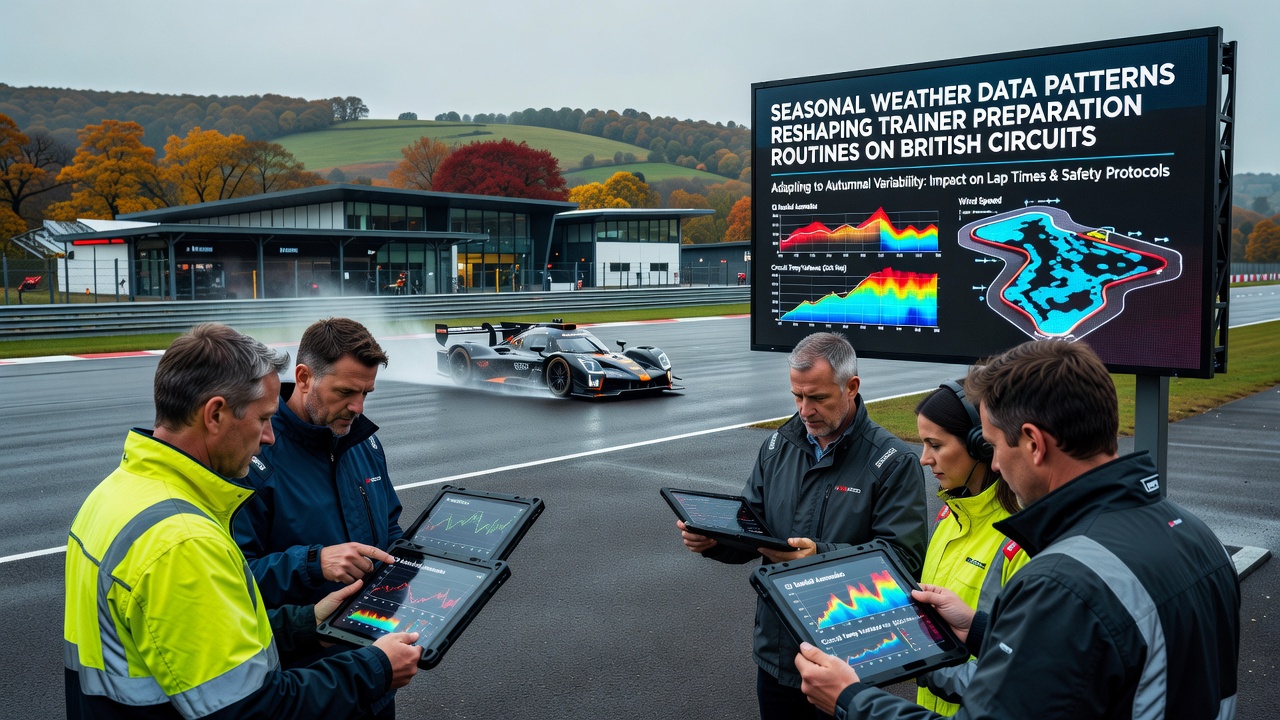 **Technology Integration in Daily Work**
Portable sensor arrays and drone-assisted moisture mapping now supplement traditional ground inspection methods. Trainers receive daily dashboards that combine these readings with historical performance data from similar conditions. Sessions that once followed rigid weekly structures now flex according to probability thresholds, with high-intensity work moved forward or delayed based on three-day forecasts rather than monthly plans. At Lingfield and Kempton, all-weather circuits serve as buffers when turf data indicates rapid deterioration. Trainers coordinate movement between surfaces using predictive algorithms that factor wind chill alongside rainfall totals, ensuring horses maintain consistent training loads without abrupt changes in footing resistance. **Longer-Term Planning Implications**
Seasonal aggregates compiled through 2026 reveal that average preparation cycles have lengthened by several days in response to more variable spring transitions. Trainers allocate additional time for acclimatization when early-season temperatures deviate from established norms, incorporating more varied terrain work to prepare horses for inconsistent conditions encountered later in campaigns. These adjustments rely on consistent data streams rather than anecdotal observation. Circuit operators supply standardized reports that trainers combine with their own yard records, creating layered datasets that highlight recurring weather sequences and their effects on different horse profiles. Conclusion
Weather data patterns continue to influence preparation across British circuits through systematic integration of forecasts, sensor networks, and historical comparisons. Trainers at multiple venues have adapted schedules, surface usage, and workload distribution in response to documented seasonal shifts, with October 2026 projections reinforcing the need for ongoing flexibility. The result is a preparation framework that treats meteorological inputs as core operational variables alongside traditional fitness indicators.
British race circuits have long operated under variable conditions, yet recent seasonal weather data patterns now drive measurable adjustments in how trainers structure daily preparation. Records from multiple circuits show increased rainfall variability during autumn months alongside temperature fluctuations that alter ground firmness earlier in the season than historical averages indicate. Trainers respond by integrating real-time meteorological feeds into scheduling decisions, adjusting canter work and gallop intensity based on projected moisture levels rather than fixed calendars. Data collection networks at tracks such as Newmarket and Ascot feed hourly updates on soil moisture, wind direction, and precipitation forecasts into centralized systems. These feeds allow preparation teams to modify exercise regimens on short notice, shifting from turf gallops to all-weather surfaces when saturation thresholds approach critical points. According to Met Office seasonal outlook reports, October 2026 projections highlight a continuation of above-average October rainfall across southern circuits, prompting several yards to advance their transition to indoor schooling facilities by two weeks compared with 2024 routines. **Ground Condition Monitoring and Routine Adjustments**
Trainers now log ground readings alongside horse biometric data to identify patterns that correlate specific weather sequences with performance metrics. At Doncaster, for instance, teams have documented how prolonged dry spells followed by sudden downpours create inconsistent going that favors horses with particular stride lengths. Preparation schedules incorporate staggered sessions, with some horses receiving lighter workloads on days when wind speeds exceed thresholds known to increase energy expenditure during breezes. Research from European climate monitoring stations indicates that jet stream positioning has produced more frequent rapid weather transitions across the UK since 2022. Trainers at northern circuits like York and Haydock incorporate these broader atmospheric trends into long-term conditioning plans, extending recovery periods after wet periods and increasing hill work during drier intervals to build stamina without risking joint stress on softened surfaces. **Regional Variations Across Circuits**
Circuits in the west, including Cheltenham and Exeter, experience different moisture retention patterns than eastern venues because of soil composition and prevailing wind directions. Preparation routines reflect these distinctions through customized footwear choices and surface maintenance timing. Teams at western tracks have adopted earlier application of aeration techniques when data models forecast extended mild spells, while eastern yards focus on drainage monitoring during the same periods. One study from an Australian research institution tracking analogous temperate racing environments found that integrating multi-week precipitation forecasts reduced unscheduled surface changes by 18 percent. British trainers have adopted similar modeling approaches, cross-referencing local sensor data with broader hemispheric patterns to anticipate when circuits will shift from good to soft conditions. This allows yards to align peak fitness windows with expected race-day surfaces rather than reacting after the fact.
**Technology Integration in Daily Work**
Portable sensor arrays and drone-assisted moisture mapping now supplement traditional ground inspection methods. Trainers receive daily dashboards that combine these readings with historical performance data from similar conditions. Sessions that once followed rigid weekly structures now flex according to probability thresholds, with high-intensity work moved forward or delayed based on three-day forecasts rather than monthly plans. At Lingfield and Kempton, all-weather circuits serve as buffers when turf data indicates rapid deterioration. Trainers coordinate movement between surfaces using predictive algorithms that factor wind chill alongside rainfall totals, ensuring horses maintain consistent training loads without abrupt changes in footing resistance. **Longer-Term Planning Implications**
Seasonal aggregates compiled through 2026 reveal that average preparation cycles have lengthened by several days in response to more variable spring transitions. Trainers allocate additional time for acclimatization when early-season temperatures deviate from established norms, incorporating more varied terrain work to prepare horses for inconsistent conditions encountered later in campaigns. These adjustments rely on consistent data streams rather than anecdotal observation. Circuit operators supply standardized reports that trainers combine with their own yard records, creating layered datasets that highlight recurring weather sequences and their effects on different horse profiles. Conclusion
Weather data patterns continue to influence preparation across British circuits through systematic integration of forecasts, sensor networks, and historical comparisons. Trainers at multiple venues have adapted schedules, surface usage, and workload distribution in response to documented seasonal shifts, with October 2026 projections reinforcing the need for ongoing flexibility. The result is a preparation framework that treats meteorological inputs as core operational variables alongside traditional fitness indicators.